


OG Trail - Travel to Oregon
4.1276.00 Reviews
App Specs
- Version
- 25.12.05
- Updated On
- License
- $1.99
- Downloads
- 10,000+
- Developer
- UserLAnd Technologies
- Categories
- Educational
- Platform
- Android
Screenshots
 Analysis by AppCompare
What makes a journey game worth returning to is not just the distance on the map, but the way each choice gives you something to think about before the next leg. OG Trail - Travel to Oregon draws on the familiar Oregon Trail setup: lead a wagon party west, manage what you carry, and respond when the route throws trouble your way. I like that its appeal is easy to understand, yet the planning gives a short play session a clear purpose. This is an educational game from UserLAnd Technologies, and it suits anyone who enjoys history best when it is tied to decisions rather than presented as a lesson to read.
Small goals make the opening matter
The first stretch is about turning a broad ambition into practical choices. You are not simply told to reach Oregon City; you have to consider the party and provisions that will make the attempt possible. That gives the opening an immediate focus. I found it more engaging to think in terms of trade-offs than to treat supplies as a checklist: carrying more of one thing can leave less room for something else, and a choice that feels safe at the start may have consequences later.
For a newcomer, the useful approach is to pause before setting off and ask what kind of trip you are preparing for. A cautious plan and a lean plan are not the same, and neither is automatically best. The game’s premise encourages a little forecasting: what might the party need, and what risks are you willing to accept? That makes the early decisions a good fit for a quick learning session with a child or a friend, as long as an adult is comfortable discussing the historical setting and the hardships involved.
Progress feels tied to decisions
The clearest progress signal is the journey itself. Moving closer to the destination is satisfying, but the more meaningful feedback comes from seeing how earlier choices shape the party’s situation when events arise. River crossings, illness, and other setbacks make progress feel less like a straight line and more like a sequence of small recoveries. I would treat each run as a story of decisions rather than judge it only by whether it ends in success.
That perspective also makes the game easier to revisit. If a trip goes poorly, it is natural to wonder whether you would prepare differently next time. The learning loop is practical: remember where your plan felt strained, then adjust your priorities on a fresh attempt. A helpful habit is to notice which decisions you made because they seemed useful and which you made because you were reacting under pressure. That distinction can tell you more than simply trying to carry as much as possible.
Challenge and pace suit deliberate play
The appeal is in managing uncertainty, not in fast reactions. If you want a game that rewards reflexes or constant action, this is not the right kind of journey. Its pace gives you room to consider a decision, but that slower rhythm may also feel old-fashioned to players used to immediate feedback and elaborate modern interfaces. I see that as a meaningful trade-off: the compact, retro presentation keeps attention on the choices, while offering less spectacle than a contemporary adventure game.
It works particularly well in short stretches when you have a little time to think, such as during a quiet break or while waiting somewhere. I would not start a run when I had only a moment and expected to leave immediately; the value comes from following the consequences of decisions, not tapping through without attention. For younger players, the educational angle can make a shared session more rewarding if you talk about why a choice might have mattered instead of turning the journey into a race.
Worth Reading Before You Choose

Baby Panda World Brings Quick Play to Modern Phones, but Its Game Library Feels Busy

ESPN’s Live Game View Makes Following Close Games Easier

QuizzLand Review: A Good Fit for Short Trivia Breaks, Not Every Player

Basketball Stars: Multiplayer Is Fast, but Can It Recover When Matches Go Wrong?

WEBTOON Turns Phone Updates Into a Better Reading Routine

Link to Windows Runs on Shared Habits, Not Social Feeds
Who will enjoy the trade-offs
This is a better match for people who enjoy planning, historical settings, and replaying a familiar premise with a different approach than for players looking for a large world to explore freely. Compared with many educational games that focus on quizzes or isolated facts, this one makes learning part of a survival-and-travel scenario. Compared with a modern strategy game, it is deliberately simpler and more old-school. That difference is the point for fans of the classic format, but it can be a hurdle if you expect deep customization or a polished cinematic presentation.
A realistic way to use it is to play a little at a time over several breaks: make the starting decisions, check in on the party as events unfold, and think about what you would change afterward. That creates a more satisfying experience than rushing to the destination in one distracted sitting. It can also prompt a useful conversation about how difficult travel was and why planning mattered, without pretending that a game can replace a fuller history lesson.
Practical expectations before playing
The game is priced at $1.99, so I would decide based on whether its particular blend of nostalgia and resource planning appeals to you, rather than expecting a free, expansive simulation. It has an average rating of 4.4 from 448 ratings, with 177 written reviews and over 10K installs. Those figures suggest an established audience, but they cannot tell you whether its measured pace or retro style will suit your taste. Its age rating is Everyone 10+, a useful point for families considering a shared play session.
It was released on April 12, 2024, and version 25.12.05 is listed for Android 6.0 and later. Those details make it easier to check basic compatibility before deciding. The questions I would ask myself are straightforward: do I enjoy making resource choices, am I comfortable with an older presentation, and would I rather have a focused simulation than a broad adventure? If the answer to those leans yes, this is a more distinctive choice than another quick quiz app.
Setting Off on the Adventure
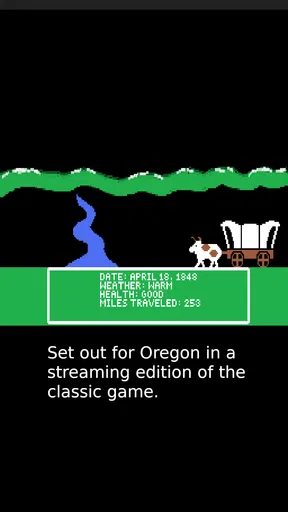
The moment you launch the app, you're greeted with a charmingly retro interface that instantly takes you back to the days of pixelated graphics and simple, yet engaging gameplay. The goal is simple: guide your wagon party across the rugged terrain to Oregon City. But don't let the simplicity fool you; this game is packed with challenges.
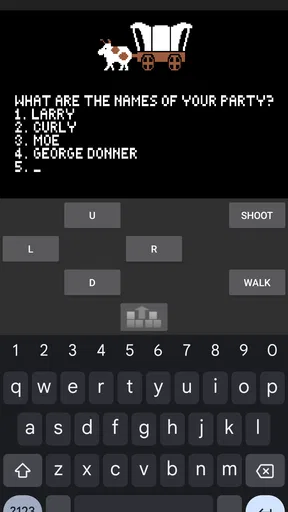
One of the first tasks is choosing your party and stocking up on supplies. Here, the app really flexes its strategic muscles. Decisions range from how many oxen to bring, to how much food and ammunition you’ll need. It’s a delicate balance, and each choice can impact your journey significantly. This part had me scratching my head more than once!
Life on the Trail
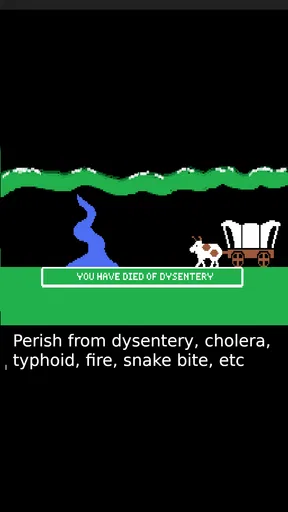
As you set off, the game transitions into a series of events and decision-making scenarios. From river crossings to dealing with illnesses, OG Trail - Travel to Oregon keeps you on your toes. I found myself getting emotionally attached to my party members, hoping they wouldn’t succumb to the dreaded dysentery or snake bites. It’s amazing how a game can evoke such feelings.
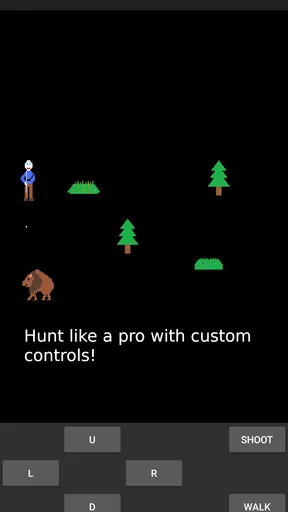
The app does a fantastic job of creating an immersive environment. You’ll face unpredictable weather, wildlife encounters, and the constant challenge of managing resources. The graphics, while pixelated, are charmingly authentic, and the sound effects add just the right touch of ambiance. Every decision feels crucial, and every mile traveled is a small victory.
Challenges and Rewards
One of the aspects I loved about the game is its ability to teach while entertaining. The historical tidbits and realistic scenarios provide a fun way to learn about the era. Plus, the sense of accomplishment when you finally reach Oregon City is unparalleled. Trust me, you’ll feel like you’ve conquered the wild frontier yourself.
The app also includes various difficulty levels and achievements, which adds to its replayability. Whether you're a veteran of the original game or a newcomer, there’s something here for everyone. You can even compete with friends to see who can make the journey most efficiently.
Keeping the challenge enjoyable
Difficulty is where I would set expectations carefully. The journey asks for patience and judgment, and an early setback can make a run feel harsher than expected. I would not assume that one poor outcome means the game is unfair; it may be a sign that the initial plan left too little room to adapt. On the other hand, players who dislike losing progress or revisiting a familiar route may find the challenge more frustrating than motivating.
When I want to learn from a run, I focus on one adjustment at a time. Changing every preparation choice at once makes it difficult to tell which decision helped. Keeping a simple mental note—what I packed, where I felt short, and which event forced a difficult choice—turns a replay into a small experiment. That is a more satisfying way to approach the game than trying to guess a perfect strategy immediately.
Its pacing also means that the experience is not built around constant rewards. The payoff comes from seeing the trip continue and handling the next problem, rather than from a stream of rapid unlocks. If you need frequent new content to stay interested, that restraint may make the game feel repetitive. If you enjoy refining a plan and comparing outcomes, the slower cycle can be a strength.
When another kind of game is better
I would skip this if what you want is a free-roaming frontier, a modern visual adventure, or a short educational quiz with clear right-and-wrong answers. Those formats serve different moods. Here, historical context sits inside a management challenge, so the player has to accept uncertainty and weigh limited resources. It is also not the best choice for someone who wants a purely relaxing game: the consequences of choices and the possibility of setbacks are central to its character.
For a family, I would use it as a conversation starter rather than a stand-alone history course. A child can make a choice about provisions and then talk through what might happen, while an adult can add context about travel and risk. That shared approach makes the educational side more tangible, but it does require someone to be present and engaged; the game itself is not a substitute for guided discussion.
Final Thoughts
Overall, OG Trail - Travel to Oregon is a delightful blend of strategy, history, and adventure. It’s perfect for those who love a challenge and appreciate a bit of nostalgia. The app is available for both Android and iOS, so it’s easy to get started on your own epic journey.
If you’re ready to test your skills and embark on a memorable adventure through the great American wilderness, this app is a must-try. Just remember to pack enough supplies and prepare for the unexpected. Happy trails!
Pros
- Engaging storyline that keeps you hooked.
- Authentic historical details enhance realism.
- User-friendly interface for easy navigation.
- Multiple paths enhance replay value.
- Offline mode for uninterrupted gameplay.
Cons
- Limited character customization options.
- In-app purchases can be pricey.
- Occasional bugs disrupt experience.
- Graphics may seem dated to some users.
- Slow loading times on older devices.
FAQs for OG Trail - Travel to Oregon
What is OG Trail - Travel to Oregon about?
OG Trail - Travel to Oregon is a modern twist on the classic journey simulation game, where players embark on a virtual adventure across the historic Oregon Trail. The game combines nostalgic elements with updated graphics and gameplay mechanics, challenging players to make strategic decisions related to survival, resource management, and exploration.
Is OG Trail - Travel to Oregon suitable for all ages?
Yes, OG Trail - Travel to Oregon is designed to be family-friendly and suitable for players of all ages. The game includes educational elements that teach players about history and geography while maintaining engaging gameplay. Parents can feel confident that the content is appropriate for children and enjoyable for adults.
What platforms is OG Trail - Travel to Oregon available on?
OG Trail - Travel to Oregon is available for both Android and iOS devices. Players can download the game from the Google Play Store or the Apple App Store, ensuring compatibility with a wide range of smartphones and tablets. Be sure to check the specific system requirements before downloading.
Does OG Trail - Travel to Oregon require an internet connection?
No, OG Trail - Travel to Oregon can be played offline, making it an ideal option for travel or situations where internet access may be limited. However, an internet connection may be required for certain features, such as updates or in-game purchases, to enhance the overall experience.
Are there in-app purchases in OG Trail - Travel to Oregon?
Yes, OG Trail - Travel to Oregon offers in-app purchases that allow players to enhance their gameplay experience. These purchases can include additional resources, exclusive items, or special features. While they can provide advantages, they are entirely optional, and players can enjoy the game fully without making any purchases.


